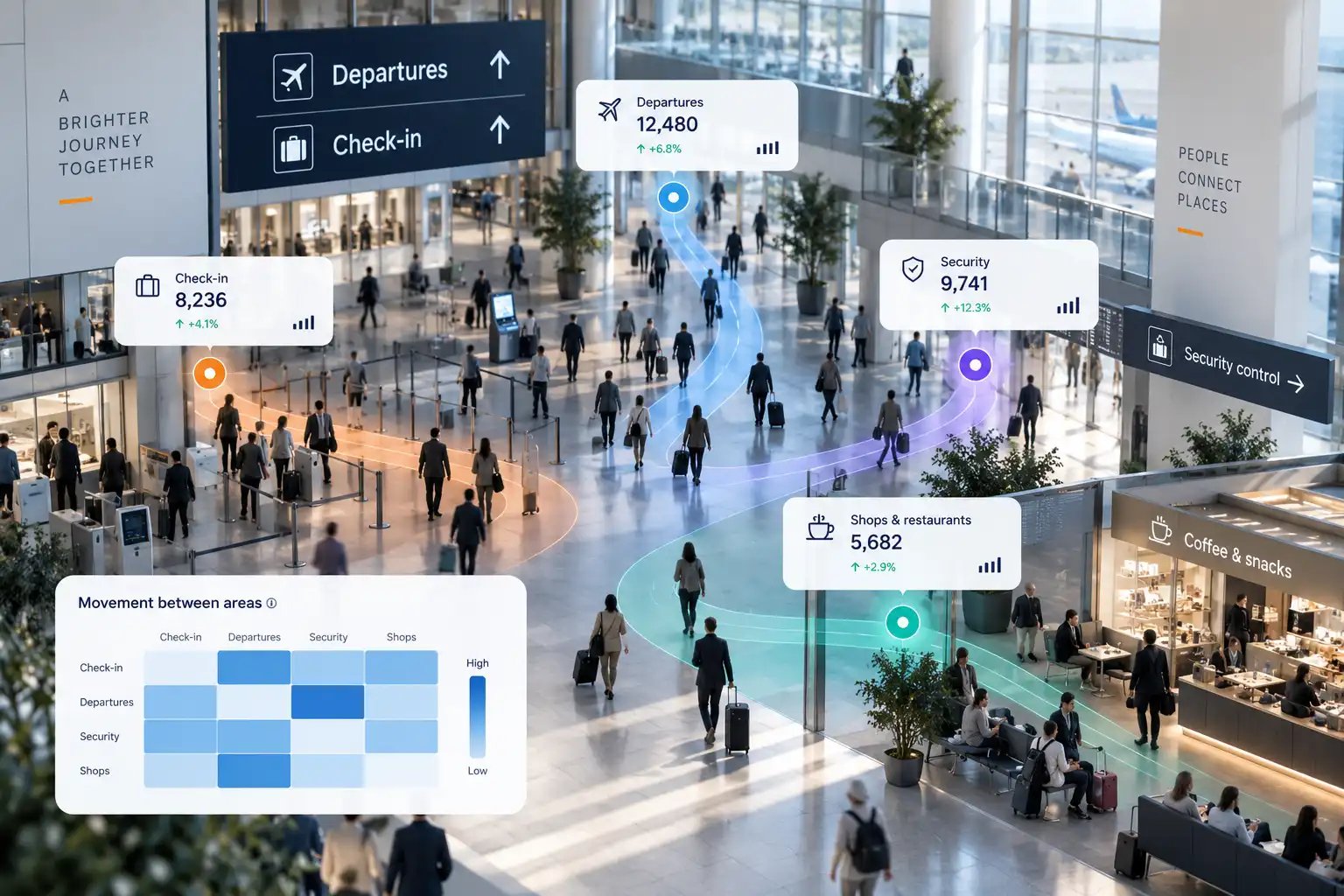

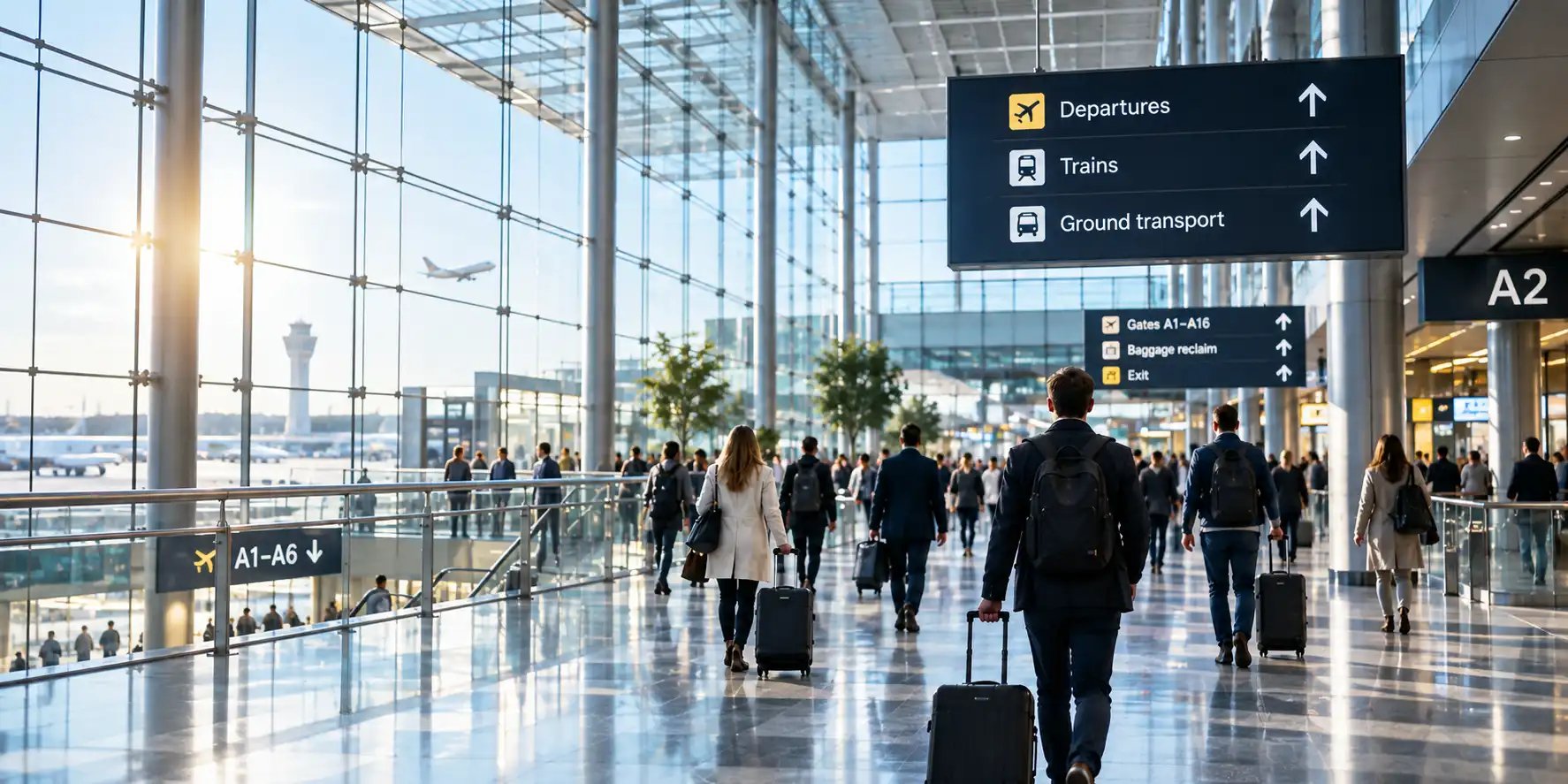
RELIABLE INSIGHT INTO PASSENGER MOVEMENT

Measure entries, exits and flow in complex transport environments — where timing, safety and consistency matter.

Built for airports, rail stations and transit hubs operating at scale.


SEE HOW MEASUREMENT WORKS IN TRANSPORT HUBS

INDUSTRY: TRANSPORT & TERMINALS

Why transport flow measurement fails without structure

Passenger flow is time-critical

Transport environments operate on tightly scheduled intervals. Passenger volumes fluctuate rapidly around departures, arrivals, and transfers.

Without structured time-aligned measurement, flow data cannot support operational decisions.

Multiple movement streams overlap

Airports, train stations, and terminals combine arrivals, departures, transfers, staff movement, and retail visitors.

Without defined segmentation, raw counts do not reflect operational reality.

  • Arrivals
  • Departures
  • Transfers
  • Staff movement
  • Retail visitors

Bottlenecks form dynamically

Security, boarding gates, ticket control, and escalators create friction points that shift throughout the day.

Without structured queue and density monitoring, congestion becomes reactive rather than managed.

Infrastructure capacity is not static

Platform availability, gate changes, maintenance work, and service disruptions alter passenger routing.

Without calibrated measurement zones, comparisons across days and terminals lose validity.

Performance data is not aligned

Passenger flow, queue time, and operational metrics often sit in separate systems.

Without aligned timestamps and standardized reporting windows, throughput cannot be benchmarked reliably.

Efficient transport infrastructure depends on standardized measurement of passenger flow, density, friction, and throughput across terminals and time periods.

METRIC LAYER

WHAT CAN BE MEASURED IN TRANSPORT ENVIRONMENTS

Standardized measurement of passenger movement, presence, congestion, and throughput performance — comparable across terminals, platforms, and time periods.

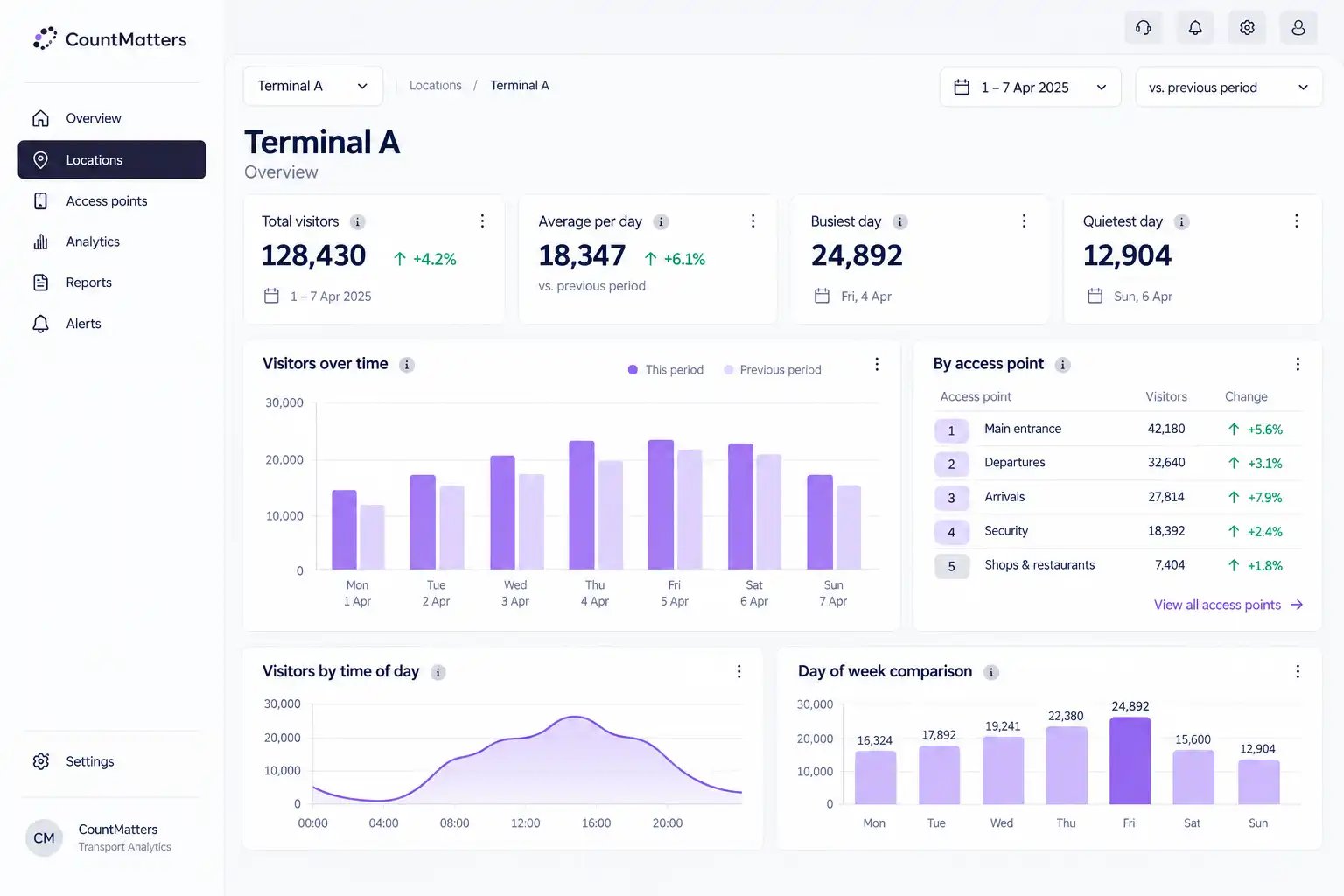
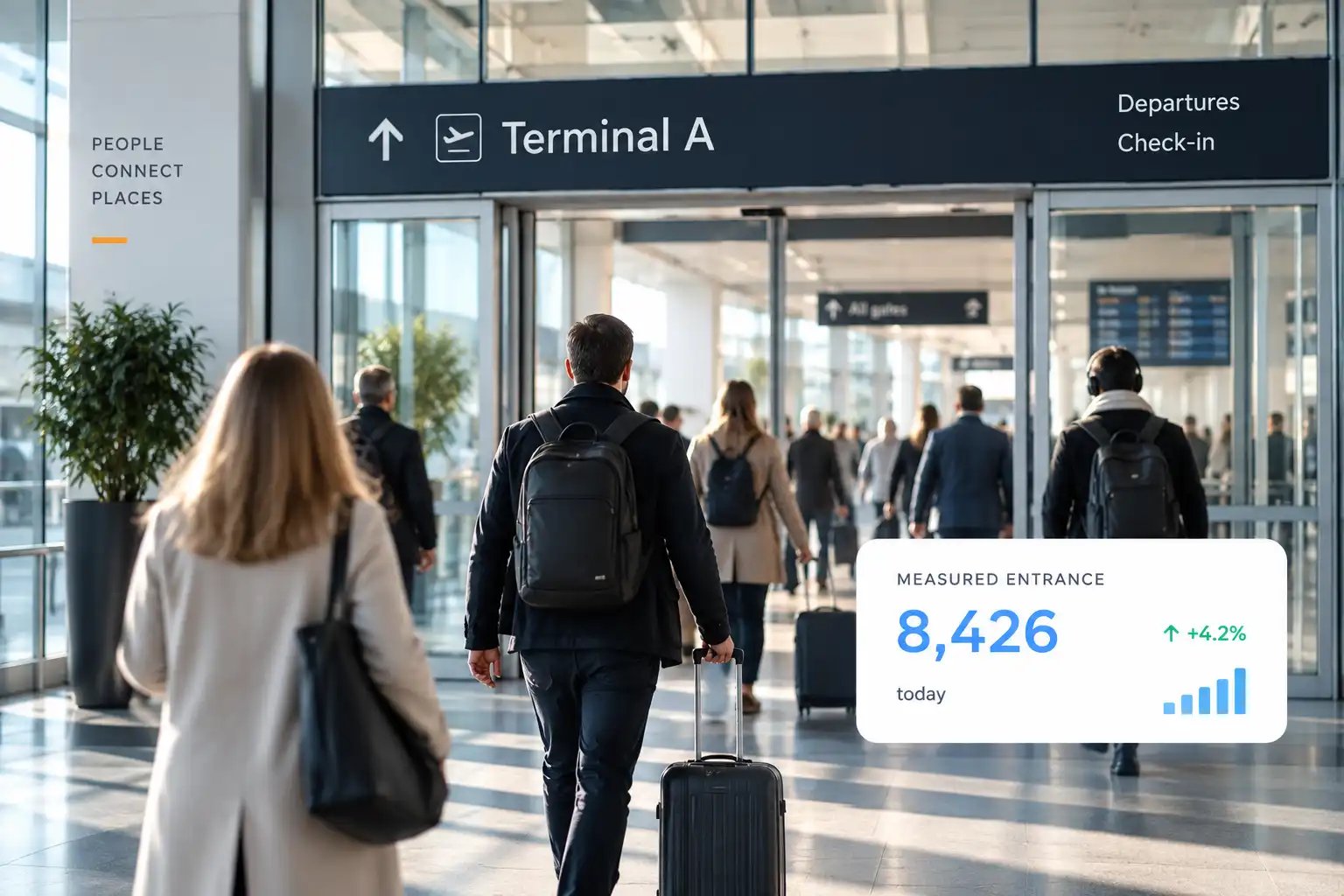
PASSENGER ENTRIES

Verified counts of passengers entering defined terminal or station areas.

FLOW PATTERNS

Directional movement between entrances, platforms, gates, and service areas.

PLATFORM / TERMINAL OCCUPANCY

Real-time presence within defined areas such as platforms, halls, or gates.

DWELL TIME

Measured time spent in defined zones prior to departure or transfer.

QUEUE LENGTH & WAIT TIME

Measured waiting conditions at security, boarding, ticketing, or service points.

CONGESTION THRESHOLD BREACHES

Detected instances where predefined occupancy or density limits are exceeded.

BOARDING / SERVICE THROUGHPUT

Volume of passengers processed within defined time intervals.

PEAK LOAD PERIODS

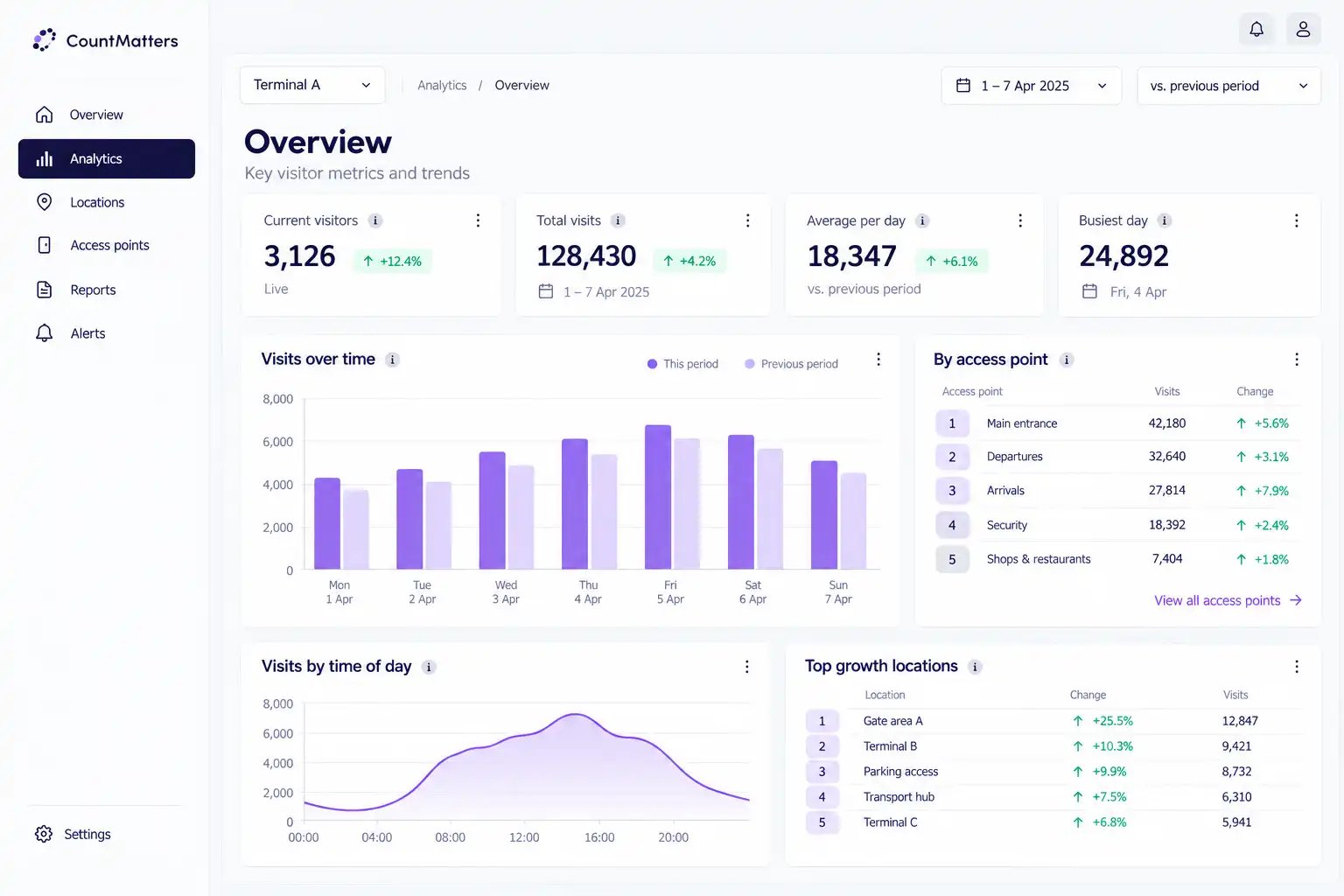
Identified high-traffic intervals across day, week, or seasonal cycles.

TERMINAL BENCHMARK INDEX

Normalized comparison across terminals, platforms, or transport hubs.

How measurement works in transportation environments

Reliable transportation measurement requires robust deployment, clear zones, and validation across shifts, crowding, and changing flow.

ZONE LOGIC

Define gates, platforms, entrances, and transfer points so measurement is comparable across areas and time.

  • Separate passing vs dwelling
  • Consistent in/out per zone
  • Defined inter-zone transfers

ROBUST DEPLOYMENT

Transportation sites have high volumes, variable lighting, and edge cases. Deployment must be stable and operations-grade.

  • Fixed mounting for stable field-of-view
  • Maintenance plan without downtime
  • Monitoring for uptime and data loss

TIME LOGIC & NORMALIZATION

Transport is driven by timetables and peaks. Measurement must be normalized to compare days, lines, and periods.

  • Peak vs baseline views
  • Compare like-for-like time windows
  • Handle event-driven anomalies

QUALITY & AUDIT

Numbers are used for operations, safety, and planning. They must be traceable and defensible when decisions are reviewed.

  • Tolerances, deviation log, change history
  • Exports for internal controls
  • Clear ownership of definitions and reporting

TURN PASSENGER FLOW INTO SMARTER OPERATIONS

Trusted by transport authorities for over 30 years, CountMatters turns real-time movement data into decisions that improve safety, reduce wait times, and elevate the transit experience.

Curious how it works?

Book a 15-minute walkthrough and see the platform in action—just fill out the short form to get started.

TALK TO US ABOUT RELIABLE MEASUREMENT IN TRANSPORT HUBS

Learn how CountMatters delivers consistent measurement across terminals and over time.

Hero Section - Homepage