RELIABLE MEASUREMENT IN RETAIL ENVIRONMENTS

Measure entries, presence and movement in real-world retail environments—where layouts change, traffic is uneven, and consistency matters.

DISCUSS RETAIL MEASUREMENT REQUIREMENTS

INDUSTRY: RETAIL & COMMERCIAL SPACES

Why retail measurement fails without structure

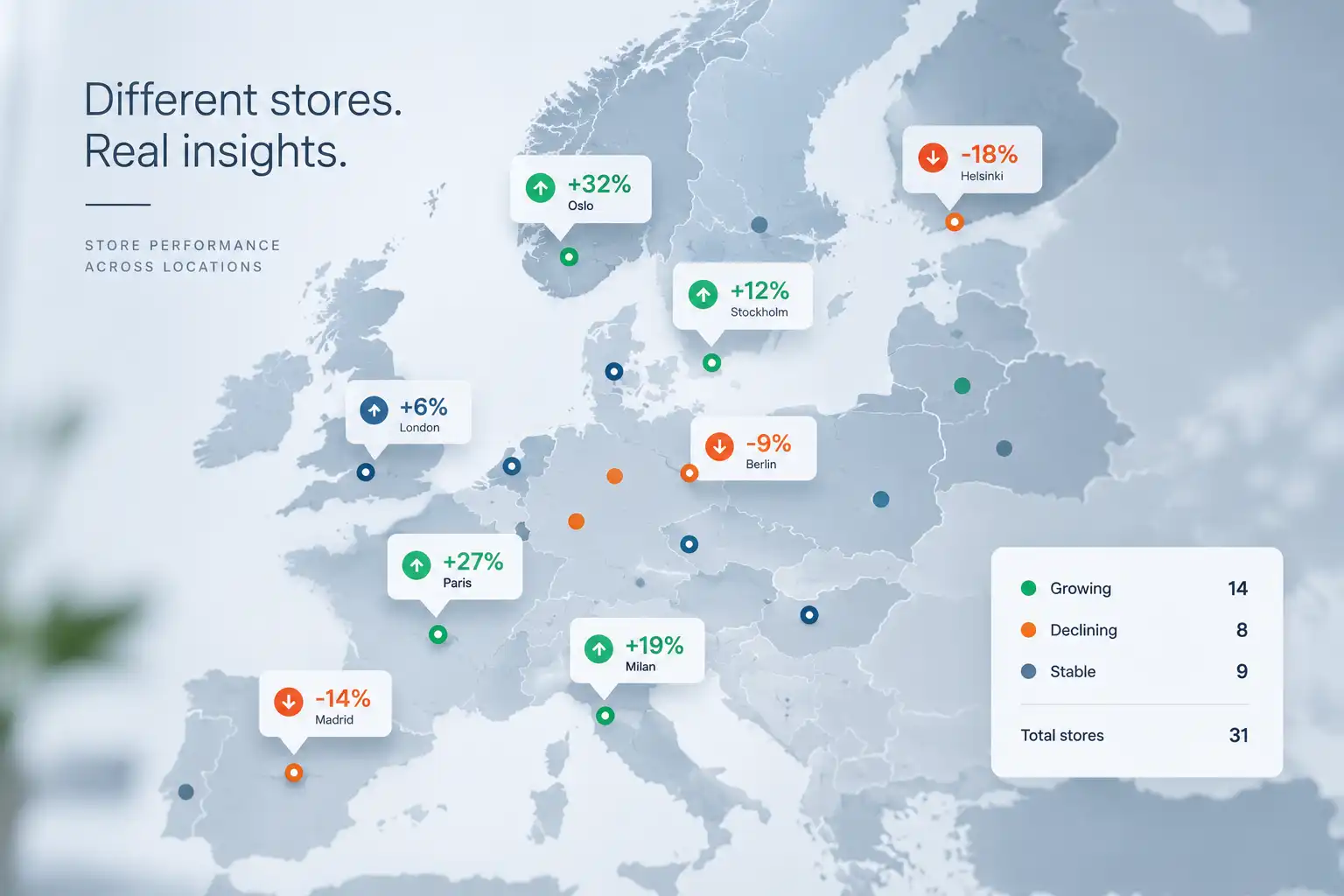
Multiple entry points & variable flow

Retail traffic is non-linear. Multiple entrances, campaign-driven peaks, and layout changes distort simple counts.

Without defined measurement rules, footfall data becomes inconsistent across stores and time periods.

Zone definitions change over time

Store redesigns, temporary displays, and seasonal layouts shift movement patterns and dwell behavior.

If zones are not standardized and maintained, historical comparisons lose validity.

Friction is often invisible

Queue conditions fluctuate by minute. Short-term congestion impacts conversion but is rarely captured systematically.

Without structured queue measurement, conversion loss remains hidden.

Commercial data is misaligned

Footfall, POS, and operational systems often operate on different timestamps and definitions.

Without alignment and normalization, physical conversion and revenue metrics cannot be benchmarked reliably.

Retail performance improves when measurement is standardized across movement, presence, friction, and commercial outcomes.

METRIC LAYER

WHAT CAN BE MEASURED IN RETAIL ENVIRONMENTS

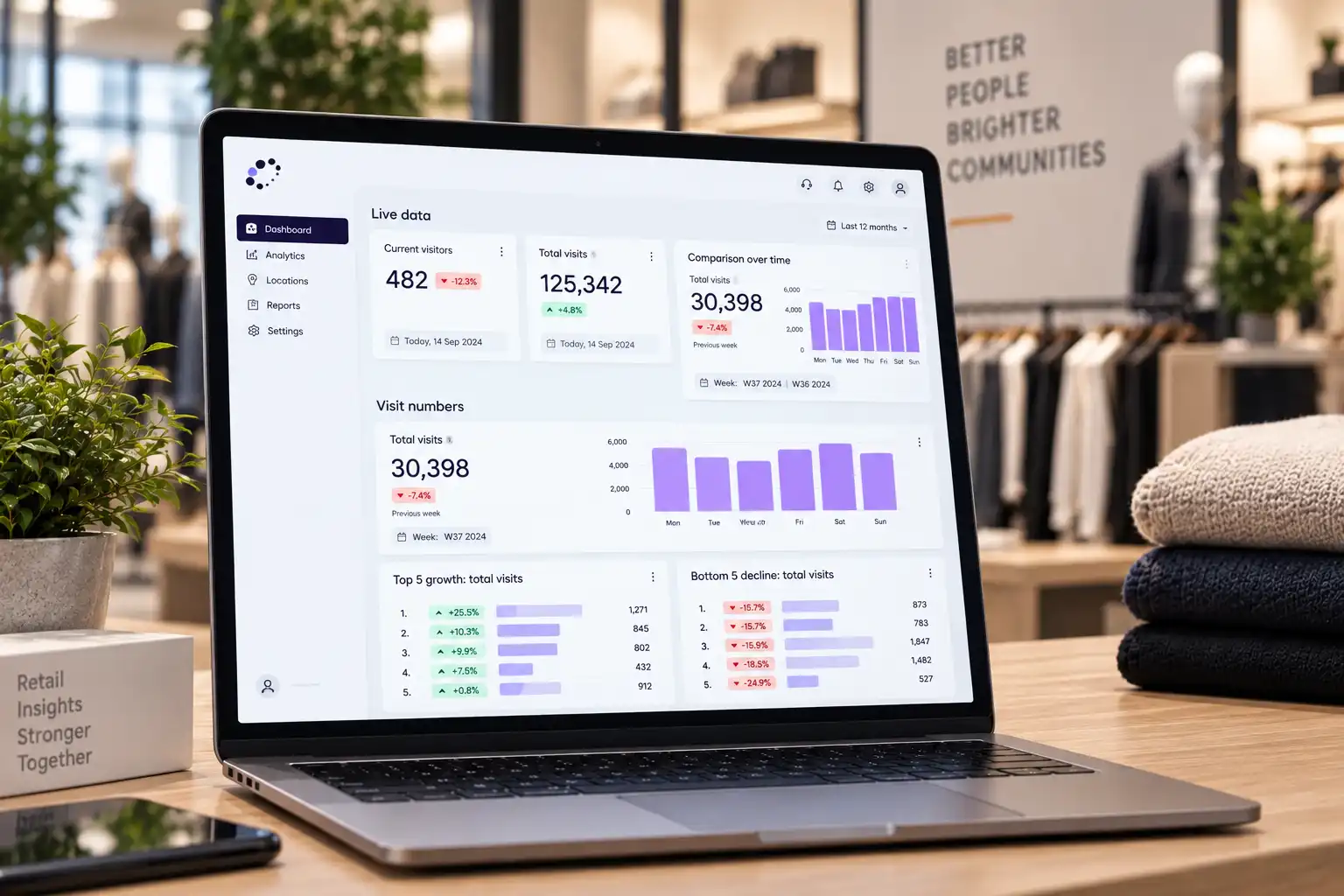
Standardized measurement of movement, presence, friction, and commercial performance — comparable across stores and time periods.

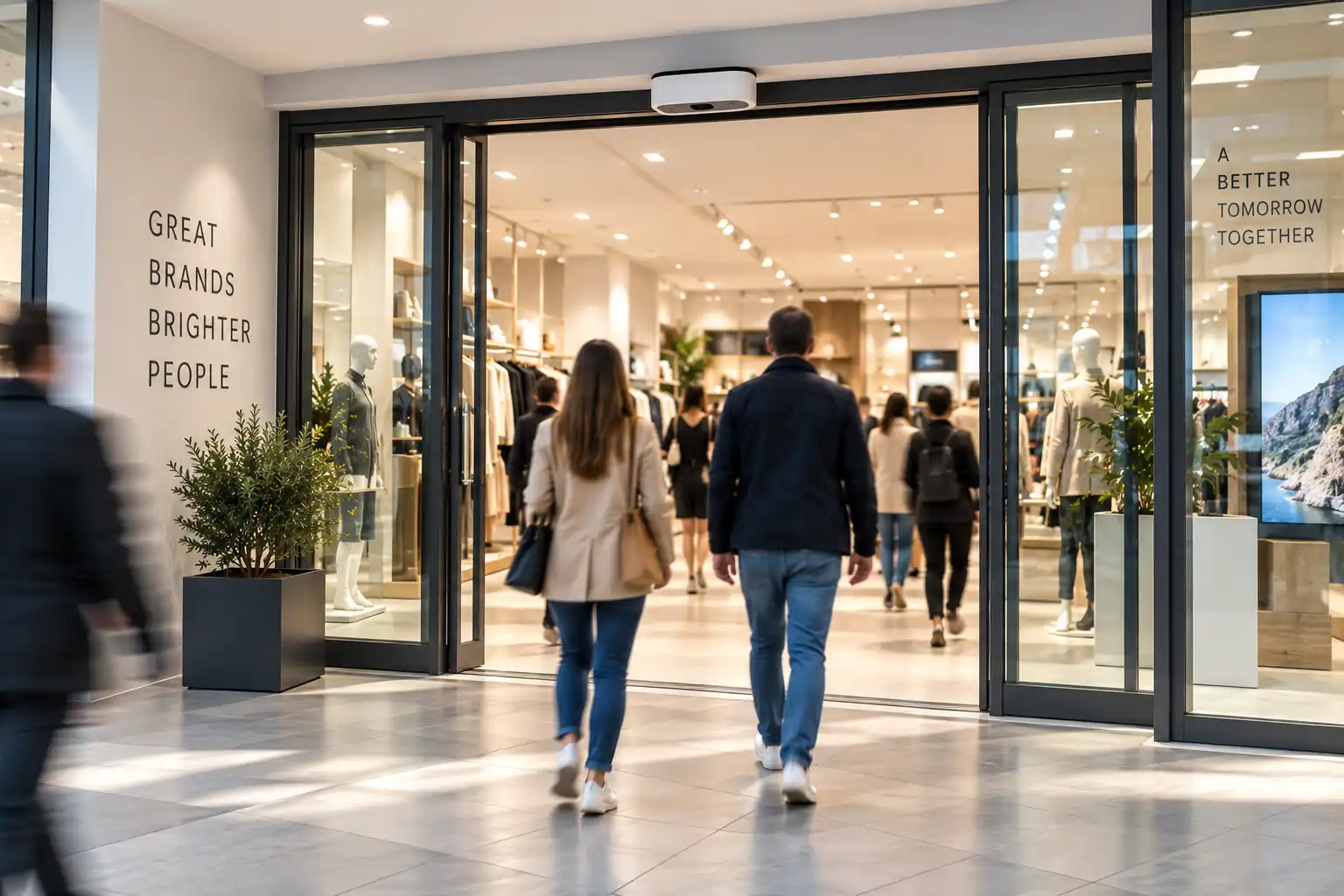
FOOTFALL (ENTRANCES)

Verified visitor counts at defined entry points.

FLOW PATTERNS

Directional movement and high-traffic paths within the store layout.

DWELL TIME

Measured time spent in store or defined zones.

OCCUPANCY LEVELS

Real-time presence within defined areas.

QUEUE LENGTH & WAIT TIME

Measured queue conditions at checkout or service points.

QUEUE-RELATED CONVERSION LOSS

Observed relationship between wait time and transaction decline (when deployed).

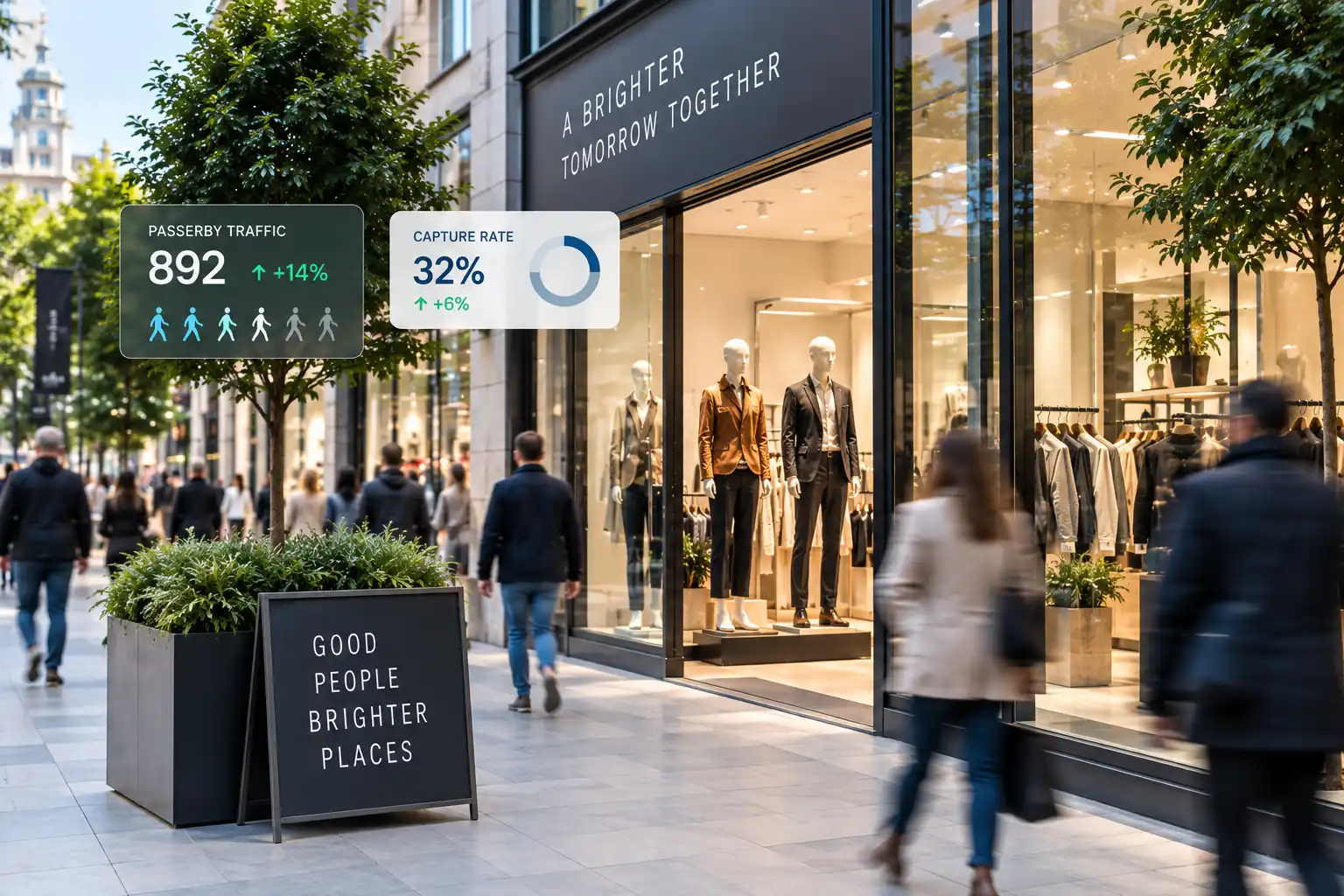
PHYSICAL CONVERSION RATE

Transactions divided by verified footfall.

REVENUE PER VISITOR

Revenue divided by footfall (when integrated with POS).

STORE BENCHMARK INDEX

Normalized comparison across formats and locations.

HOW IT WORKS

How measurement works in retail environments

Reliable retail measurement requires clear zone logic, stable deployment, and ongoing validation.

ZONE ARCHITECTURE

Entrances, thresholds and dwell zones must be defined consistently across stores.

  • Shared definitions across locations
  • Zone versioning when layouts change
  • Clear in/out logic

DEPLOYMENT STABILITY

Measurement must remain stable despite store operations and layout changes.

  • Fixed mounting and defined field-of-view
  • Calibration per layout
  • Monitoring for uptime

ONGOING VALIDATION

Accuracy must be documented and maintained over time.

  • Drift detection
  • Tolerance thresholds
  • Optional POS cross-validation

GOVERNANCE

Portfolio benchmarking requires central ownership of definitions and reporting logic.

  • Shared reporting structure
  • Traceability of changes
  • Audit-ready exports

TALK TO US ABOUT RELIABLE RETAIL MEASUREMENT

Learn how CountMatters supports consistent measurement across locations and over time.


TALK TO US ABOUT RELIABLE RETAIL MEASUREMENT

Learn how CountMatters supports consistent measurement across locations and over time.

 
Hero Section - Homepage