
What it is
A documented reporting method that shows definitions, processing, quality, and changes—by site and period.
Standardized Data. Structured Documentation.
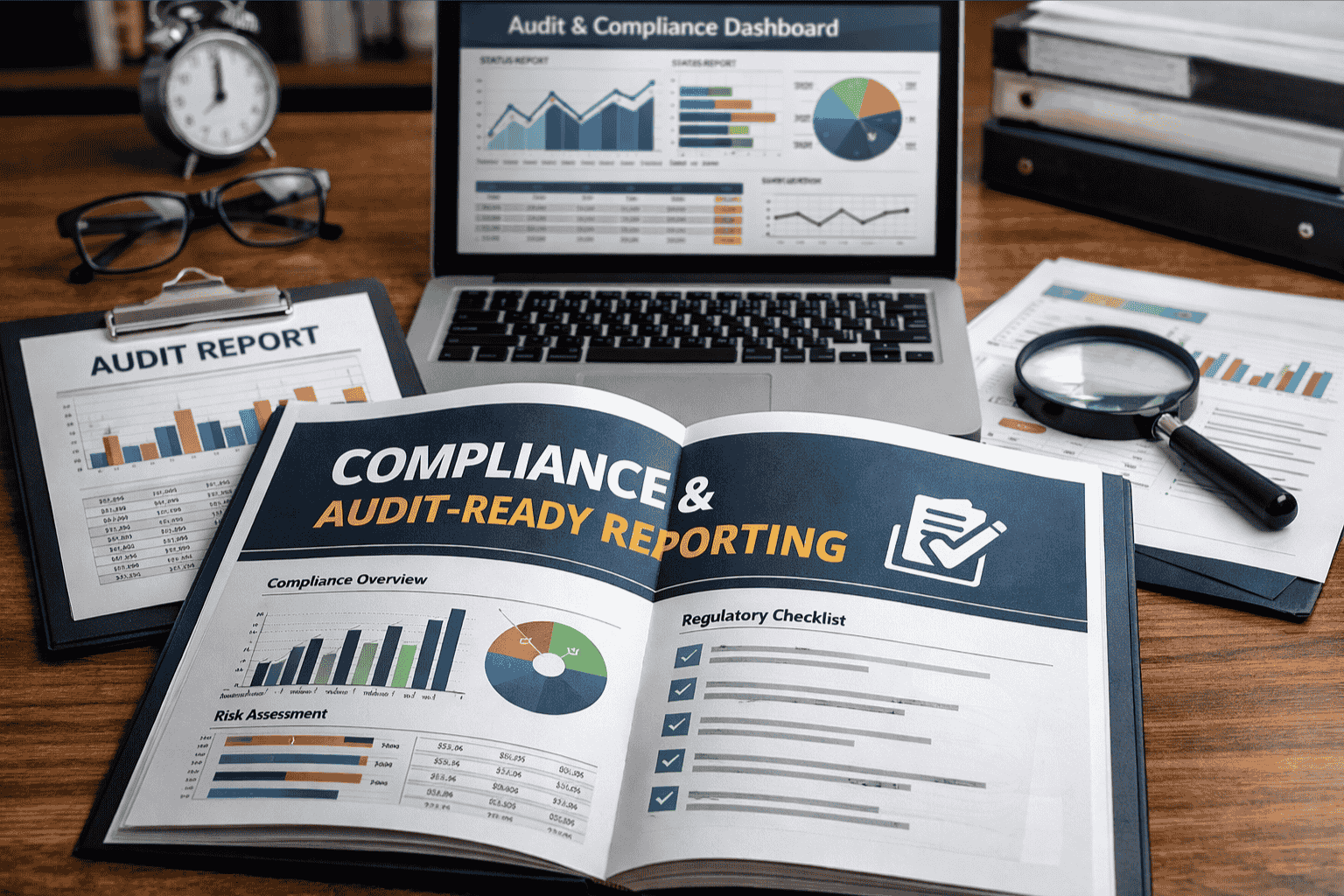
Automated reporting for occupancy and traffic data with standardized records, secure storage, and enterprise-grade documentation.

Compliance & audit reporting means proving that counting data is correct, traceable, and operated against defined requirements—so numbers hold up in internal controls, third-party audits, and procurement.
A documented reporting method that shows definitions, processing, quality, and changes—by site and period.
Stable definitions, traceable change logic, and quality signals—so variance is explainable without manual clean-up.
Decision-grade numbers with documentation: who, what, when, and why—audit- and procurement-ready.
Real-time alerting isn’t about more signals. It’s about a small set of defined signals that are fast enough to act on—and stable enough to trust.
Visits or passes per time unit. Used to detect sudden drops, spikes, and deviations from normal operations.
Load against defined limits—e.g., max occupancy per zone or queue pressure at entrances.
Health of the measurement chain: sensor, data path, and expected coverage. Alerts when measurement becomes unreliable.
Concrete triggers that can be logged and audited: what happened, when, where, and what response was triggered.
Goal: fewer, better alerts. An alert without a defined action is just noise.
Audits rarely fail on the number. They fail on evidence: definitions, control trails, and change history. That’s where most setups break.
If definitions live in people’s heads, spreadsheets, or informal routines, they can’t be audited.
Sensors move, zones change, rules get updated. Without a change log, history becomes unreliable.
Without visible quality signals, an audit becomes a full-chain investigation instead of evidence verification.
Compliance is operational: documentation, change control, and verification—not just reporting.
When data is documented and auditable, you can use it in governance and procurement without re-explaining the numbers every time. Focus shifts from debate to decisions.
You can show what was measured, how it was processed, and why variance happens—with traceability back to method and operations.
Requirements become verifiable: data quality, operations, traceability, and method. That reduces vendor risk and internal uncertainty.
Controls can run as routine: variance is detected early, explained quickly, and documented consistently.
Outcome is not “more reporting.” It’s less friction when numbers must withstand scrutiny.
This matters when numbers leave the analytics team and enter controls, procurement, and reporting against external requirements.
Recurring checks of quality, variance, and changes—with documentation that can be archived.
Evidence that shows method, changes, and quality—so audits can verify without reverse-engineering the numbers.
As requirements in procurement and as follow-up on data quality and operations in contracts.
Use case defines quality: if numbers must withstand scrutiny, “Used in” must include scrutiny moments.
In compliance and audits, you win by making evidence simple: definitions, control trails, and data quality must be visible without manual explanation.
An auditor must be able to see how numbers were produced: count point, zone, rules, and period.
When something changes, it must be documented: what, when, who, and what impact it may have on history.
Data quality must be explicit, so numbers can be used without someone having to interpret operational state.
When evidence is built into reporting, audits become verification—not investigation.
Focus: what makes reporting auditable—and what you must be able to prove when asked.
Three things: (1) definitions and boundaries, (2) data quality by period, and (3) a change log for method/sensor/rules. Without this, you can’t explain why numbers changed.
Yes—if the change is logged and breaks in series are flagged. Then you can document what’s comparable and what must be treated as before/after.
We make it explicit. Reporting should show quality, not hide it. Variance is flagged, explained, and tied to actions—so numbers aren’t used incorrectly.
It makes requirements verifiable: method, operations, traceability, and data quality. That reduces vendor risk and makes evaluation more objective.
For over 30 years, CountMatters has defined the standard in visitor analytics.
As the original innovators of people counting, we transform foot traffic into business intelligence.